
Why Are Moths Drawn to Flames? The Science Behind Their Attraction

Written By: Adetunji Matthew – Proffmatt
Last Updated on: March 13, 2025


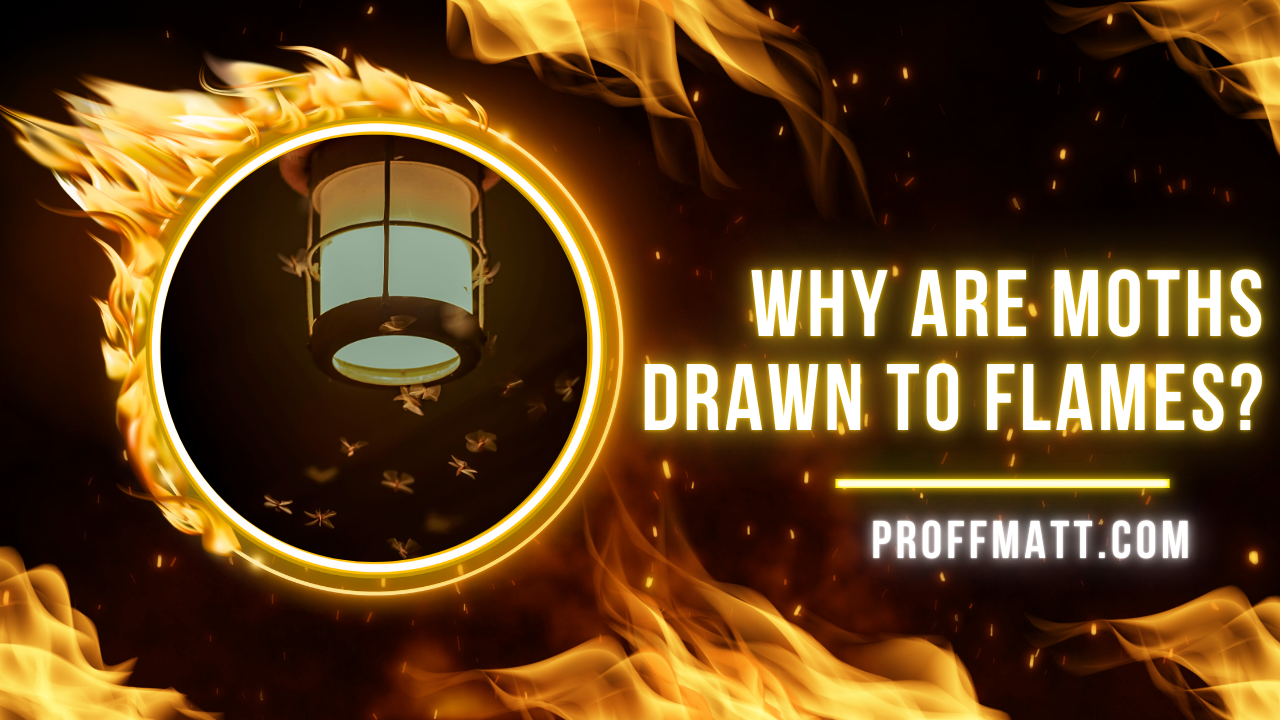
Ever noticed moths fluttering around a light? It’s a curious sight that raises an intriguing question: why are they drawn to flames? Many think it’s just a silly quirk, but the truth reveals a fascinating behavior shaped by nature.
In this post, we’ll uncover the reasons behind this attraction. From the moths’ navigation instincts to their sensitivity to light, you’ll learn what drives these creatures toward the very thing that can harm them. By the end, you’ll have a clearer understanding of this common phenomenon and what it means for wildlife.
The Science Behind Moth Attraction
Understanding why moths are drawn to flames involves looking at their behavior and biology. Two primary factors play a role: phototaxis and celestial navigation. Let’s explore these aspects to uncover the science behind this captivating phenomenon.
Phototaxis in Moths
Phototaxis is an innate behavior where organisms move toward or away from light. In moths, this tendency generally leads them to gravitate towards bright light sources. At its core, phototaxis manifests in two forms: positive and negative. Moths exhibit positive phototaxis, meaning they are attracted to light.
But why this attraction? One theory suggests that moths have evolved to use natural light sources, like the moon, to navigate during the night. By flying toward light, they can maintain a steady flight path. However, artificial lights, such as those from street lamps or porch lights, confuse their navigation system. Moths circle artificial lights instead of using them as a guide, which can lead them dangerously close to flames.
Celestial Navigation
Moths generally rely on celestial bodies for orientation. The moon and stars provide stable points in the night sky, enabling moths to navigate accurately over long distances. Unlike the bright, concentrated light from artificial sources, natural lights are expansive and consistent.
When a moth approaches a flame, it attempts to orient itself based on the light source. Instead of using the light as a reference point, it becomes trapped in a loop, often flying in spiral patterns around the flame. This behavior can lead to exhaustion or worse, as they remain oblivious to the danger.
Even though moths have evolved alongside natural light sources, human-made lights disrupt their natural instincts. This disruption highlights how the introduction of artificial lights has a significant impact on wildlife behavior, particularly nocturnal species like moths. It raises intriguing questions about our environment and the consequences of our technological advancements on nature. Why do we continue to design environments that interfere with the instincts of wildlife?
Next time you see moths dancing around a flame, remember their fascinating biology at play. It’s a collision of their evolutionary history and our modern world.
The Role of Ultraviolet Light
Moths have a unique relationship with light, particularly ultraviolet (UV) light. Understanding this relationship helps explain why they are often seen dancing around flames and artificial lights. Their attraction isn’t just a flight of fancy; it’s deeply embedded in their biology.
Sensitivity to UV Light
Moths possess specialized eyes that are highly sensitive to UV light. This capability stems from the presence of photoreceptors in their compound eyes, which allow them to detect wavelengths that are invisible to humans. While we see a spectrum limited to visible light, moths perceive a broader range, including UV light.
This sensitivity is advantageous for moths in the wild. Many flowers emit UV patterns that signal nectar availability. By seeing these patterns, moths can locate food sources effectively. However, this trait also leads them into tricky situations. Artificial lights, especially those that emit UV radiation, can appear as significant beacons in their environment.
When moths are near a UV source, they respond instinctively, drawn to what they perceive as a natural guide. This confusion leads moths to artificial lights, where they often spiral around, mimicking their natural navigation patterns. Their anatomical design, which prioritizes light detection, becomes a double-edged sword in human-inhabited areas.
Impacts of Urban Lighting
Urban environments pose significant challenges for moths. The multitude of bright lights and their UV emissions disrupt natural behaviors. In cities, streetlights and neon signs outshine the natural moonlight moths rely on for orientation.
The impact of artificial lighting on moth behavior can be profound:
- Disorientation: Moths can become confused and disoriented, leading them to fly in circles around lights rather than navigating as they typically would.
- Reduced Population: With moths consistently attracted to artificial lights, their chances of reproduction can diminish, impacting overall populations.
- Ecological Imbalance: As moths contribute to pollination, disruptions in their patterns can affect plant reproduction and food chains.
Urban lighting not only affects individual moths but can also shift entire ecosystems. It raises questions about how we might adapt our lighting practices to coexist with wildlife. How can we minimize light pollution to protect these sensitive creatures?
When you see a moth drawn to a flame, remember their unique sensitivity to UV light. It’s a complex interaction between their biology and the changing world around them.
Moths vs. Other Insects
When discussing why moths are drawn to flames, it’s important to consider how they compare to other nocturnal insects. Different species respond to light in unique ways, which can help us understand the behaviors we observe.
Beetles and Other Nocturnal Insects
Beetles, like moths, are nocturnal and can sometimes be seen around bright lights. However, their reaction to light varies considerably. While moths are positively phototactic, many beetle species exhibit mixed behaviors. Some may be attracted to light, while others tend to avoid it. This difference stems from their evolutionary adaptations.
Beetles often rely more on their sense of smell than light for navigation, leading them to food sources or mates. For instance, many species of beetles are more drawn to decaying matter or specific plants rather than artificial lights. This distinction impacts how they interact with illuminated spaces compared to moths.
Other nocturnal insects, such as flies and wasps, also display different light preferences. House flies are drawn to artificial lights but often prefer the safety of darkness during their travels. Similarly, wasps may hover around lights, but they tend to be less compulsive than moths in their attraction.
This variation in behavior sparks curiosity: Why do some insects risk flying near flames, while others remain cautious? The answer lies in their unique survival strategies and ecological roles.
Ecological Consequences
The attraction of moths to artificial lights and flames has broader ecological impacts that go beyond the individual moths. Each time a moth gets too close to a flame, it may disrupt the delicate balance of predator-prey dynamics in its habitat.
When moths gather around lights, they become easy prey for nighttime predators. Bats, birds, and other predators take advantage of this opportunity. As moths congregate around artificial light sources, they inadvertently alter food availability for these predators. This shift can lead to changes in local populations and behaviors, affecting the overall ecosystem.
Moreover, the decline in moth populations due to light attraction can have cascading effects on pollination. Moths play a crucial role in pollinating various plants, and their absence can impact local flora. With fewer moths around to assist in pollination, plant life may struggle to reproduce effectively, which can lead to diminishing food sources for other organisms.
This situation prompts a critical question: How do we balance our lighting needs with the health of our ecosystems? Understanding the intricate connections between moths and their environments can help us make more informed choices about how we illuminate our spaces and protect vulnerable species.
In summary, examining how moths relate to other insects in terms of light attraction offers valuable insights into their behavior and the potential consequences on the environment. The dance of these nocturnal creatures around flames is more than just a curiosity; it’s an essential part of a much larger story in our ecosystems.
Theories and Myths Surrounding Moths and Flames
The sight of moths swarming around flames sparks curiosity and wonder. Many myths and theories have emerged over the years, shaping our understanding of this behavior. Let’s explore some of these cultural interpretations and scientific theories that provide insight into why these fascinating insects are so drawn to light.
Cultural Interpretations
Throughout history, different cultures have woven stories and symbols around moths and light. In various traditions, moths have represented personality traits, spiritual messages, and life cycles. Here are a few intriguing cultural beliefs:
- Symbol of Transformation: In many cultures, moths symbolize transformation and rebirth, like butterflies. Some see their attraction to light as a metaphor for the soul yearning for enlightenment or transcendence. This aligns with the idea that moths are drawn toward something greater than themselves.
- Myths in Folklore: In ancient cultures, moths were often associated with spirits and omens. For instance, some Native American tribes believed that moths carried the souls of deceased loved ones. In this context, their flight toward flames represented a longing to return home.
- Light as Guidance: In Japanese culture, the moth is sometimes linked to guidance. The act of following light is seen as a way to find one’s path in life, hinting at deeper meanings regarding life’s journeys.
These cultural interpretations highlight how humanity has tried to make sense of moth behavior by assigning meanings to their attraction to light. Such beliefs not only enrich our understanding of moths but also connect them to broader themes of life and spirituality.
Scientific Theories
Various scientific theories offer us a framework for understanding why moths are attracted to flames. Two main ideas stand out:
- Natural Selection and Navigation: One prominent theory suggests that moths evolved to use the moon and stars for navigation. This behavior was critical for their survival, allowing them to fly in straight lines during the night. Artificial lights disrupt this instinct, causing moths to become confused and spiral toward brighter light sources, which can lead to danger.
- Phototaxis: Another well-documented phenomenon is phototaxis, where organisms move toward light. Moths display positive phototaxis, meaning they instinctively drift toward light. It’s believed that this is an inherited trait that helps them navigate and find mates. However, the bright, intense flames don’t provide the safe, steady light source they are biologically programmed to pursue.
These scientific theories explain the intricacies of moth behavior while connecting it to their survival instincts. Understanding these concepts enables us to appreciate not just moths but also the ever-present influence of artificial light in our daily lives.
When you observe a moth fluttering toward flames, remember the blend of cultural meanings and scientific insights that underlie this captivating behavior. It’s a reminder of the rich narrative that unfolds when nature intersects with human existence.
Conclusion
Understanding why moths are drawn to flames sheds light on their fascinating behavior and biology. Their attraction stems from instincts that have evolved to rely on natural light sources for navigation. The disruption caused by artificial lights creates confusion, making them vulnerable to danger.
As we witness these nocturnal creatures dancing around flames, it’s a reminder of how human influence can impact wildlife. What changes can we make to reduce light pollution and protect these delicate beings?
Next time you see a moth fluttering near a flame, take a moment to appreciate the complex relationship between nature and our modern world. Thank you for exploring this captivating topic with us.
Filed under:
Author:Adetunji Matthew – Proffmatt
Hi, I’m Adetunji Matthew! I am founder of Proffmatt.com, where I share my journey and help others build successful online businesses.


Leave a Reply