
The First Car Accident: When and Where It All Happened

Written By: Adetunji Matthew – Proffmatt
Last Updated on: March 13, 2025


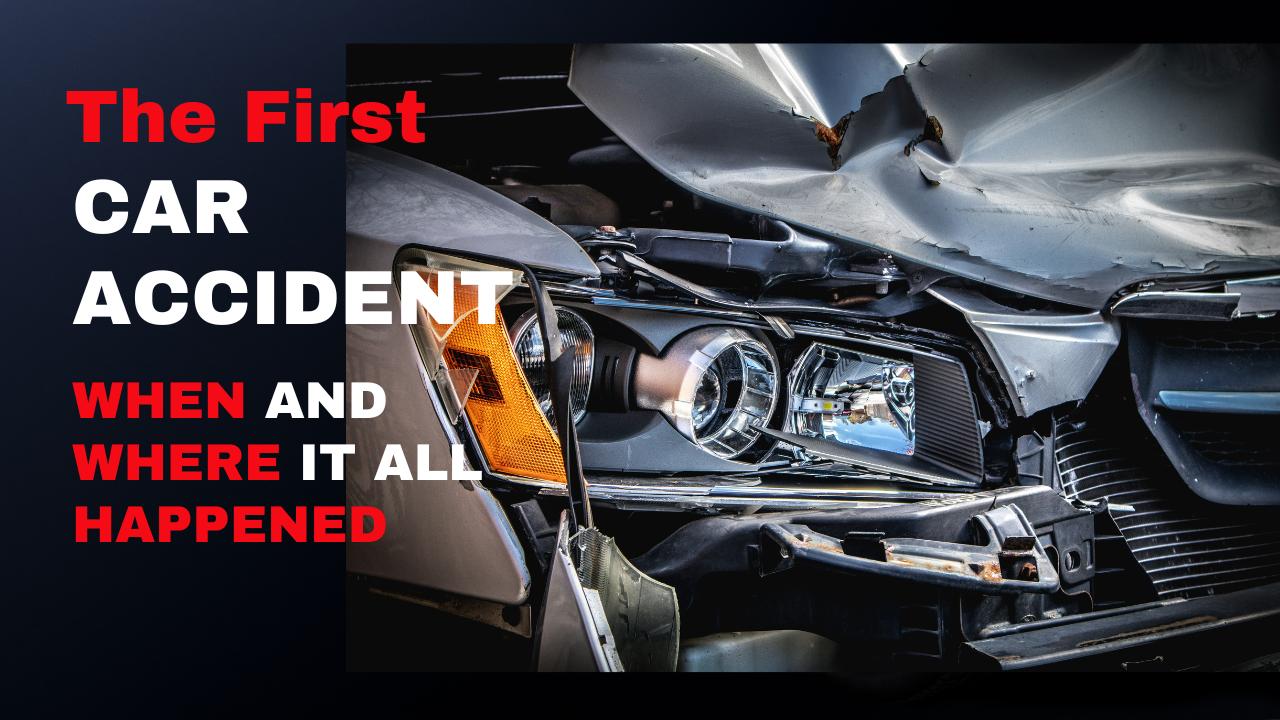
The first car accident marked a turning point in transportation history. It happened on August 31, 1869, in Ireland, involving a steam-powered vehicle and a cyclist. While it might seem trivial now, this incident laid the groundwork for discussions around road safety and vehicle regulations.
In this post, we’ll take a closer look at the details surrounding this early crash. You’ll learn not just about what happened, but why it matters today. So, let’s explore how this moment changed the way we think about cars and accidents on the road.
The Invention of the Automobile
The journey of the automobile is a remarkable story filled with innovation and vision. Understanding how we reached this point enhances our appreciation for automobiles today. Various breakthroughs and influential figures shaped the automotive landscape long before the first car accident took place.
Early Automotive Innovations
Several key inventions paved the way for the modern automobile. The concept of building a self-propelled vehicle gained traction in the late 18th century. In 1769, Nicolas-Joseph Cugnot built the first full-scale, working steam-powered vehicle. This three-wheeled wonder could carry passengers but was cumbersome and slow.
Throughout the 19th century, inventors experimented with various propulsion methods. The introduction of the internal combustion engine in the late 1800s changed everything. In 1885, Karl Benz created the Benz Patent Motorwagen, a critical milestone that combined a gasoline engine with a car chassis. This model is often considered the first true automobile, capable of carrying passengers effectively and efficiently.
Key Figures in Automobile Development
Karl Benz stands out as a prominent figure in the early automobile industry. Born in Germany in 1844, his relentless pursuit of innovation led him to develop the first practical automobile. His efforts laid the groundwork for the future of personal transportation.
Another important name is Henry Ford, who didn’t invent the car but revolutionized car production. By introducing assembly line manufacturing in the early 20th century, Ford made cars affordable for the average person. His Model T, released in 1908, marked the beginning of mass automobile usage.
Other inventors, like Gottlieb Daimler and Wilhelm Maybach, also played crucial roles in advancing automobile technology. They contributed to innovations that included high-speed engines and lightweight materials, which helped improve performance and efficiency.
The Transition from Horse-drawn Carriages to Cars
As technological advancements unfolded, society became more receptive to motorized transport. The shift from horse-drawn carriages to automobiles wasn’t just a change of vehicle; it redefined how people viewed travel.
Initially, automobiles struggled to gain popularity. Many were seen as a luxury or simply a novelty. However, as roads improved and engines became more reliable, cars offered undeniable advantages over traditional horse-drawn vehicles. They provided greater speed, convenience, and the ability to travel longer distances without the constraints of caring for livestock.
This transformation also brought a change in mindset. The idea of personal freedom became intertwined with automobile ownership. People could explore new places, and the expansion of road networks further facilitated this independence.
By the time of the first car accident in 1869, the stage was set for a new era of transportation. The innovations and key figures behind the automobile were instrumental in ushering in a future filled with possibilities on the open road.
The First Recorded Car Accident
The story of the first recorded car accident takes us to Ohio in 1891. This incident not only marks a significant moment in automotive history but also raises questions about safety and regulation on the roads.
Date and Location of the Accident
The first car accident occurred on September 13, 1891, in a small town near Columbus, Ohio, known as the village of Springfield. John Lambert was driving his newly built car, an early model that showcased the potential of the automobile. This date etched itself in history, a pivotal point where human ingenuity met the reality of unforeseen consequences.
Details of the Incident
During that fateful day, John Lambert was navigating a modest street when he encountered difficulty maneuvering his vehicle. The car, a gasoline-powered contraption, was not quite refined yet, which made it challenging to drive. As Lambert attempted to steer, he collided with a stationary obstacle—specifically, a hitching post. Thankfully, the incident didn’t result in serious injuries. However, it represented a significant event in the journey of motor vehicles. The awkwardness of this early car showcased the challenges that faced drivers even as innovation advanced.
Consequences and Impact of the Accident
While Lambert’s accident caused minor damage to his vehicle, it had broader implications for the future of transportation. This incident brought to light the need for better road safety measures and appropriate regulations for motor vehicles. As more people became excited about owning cars, it also raised awareness about driving standards, liability, and the growing concern for pedestrian safety.
Soon after, discussions sparked around establishing traffic laws and guidelines. The accident served as an early warning sign of the complexities involved in integrating automobiles into daily life. As the number of vehicles on the roads increased, it became evident that the future would demand greater responsibility and safety measures for drivers and pedestrians alike.
This accident, though minor, set the stage for what would become a crucial part of driving culture: the obligation to prioritize safety for everyone on the roads. As we look back, we can appreciate how a single collision helped shape road safety regulations that we often take for granted today.
Key Factors Leading to Car Accidents
As we reflect on the early days of the automobile, it’s clear that several factors contributed to car accidents during that period. Understanding these factors enhances our awareness of driving safety today. Let’s explore the technical limitations of early cars, the state of road infrastructure, and the influence of human error and traffic regulations.
Technical Limitations of Early Cars
Early cars were much different from the vehicles we know today. Their designs had inherent flaws that significantly contributed to accidents. Most early models lacked basic safety features, such as brakes that could stop effectively at high speeds or reliable steering mechanisms.
For instance, many vehicles had solid rubber tires, providing limited traction and stability. These design choices made it hard to control speed and direction. Drivers had to constantly adjust to the vehicle’s unresponsiveness, leading to crashes that were often unavoidable. Imagine trying to steer a heavy machine without power steering or anti-lock brakes—it required great skill and reactivity.
Additionally, the engines of these vehicles were rudimentary. They had limited power and could stall unexpectedly, leaving drivers to grapple with unpredictable situations. The combination of mechanical deficiencies and limited driver experience became a recipe for trouble on the road.
Road Infrastructure at the Time
During the late 19th century, roadways were far from what we consider safe and reliable today. Most streets were unpaved, riddled with mud, potholes, and other obstacles that presented real hazards for drivers. Imagine taking a modern car onto a gravel path dotted with holes—this was the reality for early automobile drivers.
With limited signage or traffic signals, drivers faced even more challenges. There were no marked lanes or regulated speed limits. This chaotic environment made navigation difficult and increased the likelihood of accidents. Drivers had to rely primarily on their instincts, which often led to mistakes.
The infrastructure simply wasn’t equipped for the new wave of automobiles. As a result, accidents were common, highlighting the urgent need for improved road conditions and safety regulations.
Human Error and Traffic Regulations
While technical issues and road conditions played a significant role, human error was often the most critical factor in accidents. Many early drivers lacked proper training and understanding of vehicle operation. They often overestimated their abilities to handle these new machines, leading to reckless driving behaviors.
Lack of traffic laws further complicated the situation. Without regulations dictating how vehicles should interact on the road, it was easy for drivers to behave unpredictably. Many drivers had only rudimentary knowledge of sharing the road, which created tensions between motorists and pedestrians alike.
Imagine a bustling street where cars, horse-drawn carriages, and pedestrians all jostled for space, often without any established rules. This lack of structure increased the odds of collisions while contributing to confusion and frustration.
As the number of vehicles on the road grew, discussions about safety led to evolving traffic regulations. These early accidents served as a wake-up call, prompting calls for better driver education and legal guidelines. The narrative was changing, and the need for responsible driving was becoming clearer.
Recognizing these key factors provides insight into how far we’ve come and underscores the continuous evolution around automobile safety.
Historical Context of Road Safety
The first car accident served as a catalyst for discussions about road safety and inspired the development of traffic laws. Understanding this historical context helps us appreciate the progress made in keeping roads safer for everyone.
Development of Traffic Laws and Regulations
In response to the first car accident in 1891, society began recognizing the importance of establishing traffic laws. Before this, driving was largely unregulated, leading to confusion and accidents. The collision highlighted the urgent need for guidelines that could protect both drivers and pedestrians.
The late 19th and early 20th centuries saw a gradual introduction of traffic regulations. Speed limits were among the first measures implemented, aiming to reduce reckless driving. In 1903, the Motor Car Act in the UK introduced the requirement for drivers to have a license, providing a framework for responsible driving.
As accidents continued to occur, more regulations followed. Stop signs, traffic lights, and pedestrian crossings became common sights on roads. These changes transformed how vehicles interacted with one another and with pedestrians, setting the stage for modern road safety.
Impact of the First Car Accident on Future Legislation
The first car accident underscored the need for safety measures and legislation. It forced people to confront the potential dangers of motor vehicles. This pivotal moment marked the beginning of serious discussions about road safety.
Learning from accidents like John Lambert’s, lawmakers began drafting regulations to prevent future mishaps. Each new law reflected society’s growing awareness of the risks associated with automobiles. For example, the introduction of mandatory inspections aimed to ensure that vehicles met safety standards.
As cars became more popular, so did the urgency for systematic safety practices. The establishment of organizations dedicated to road safety followed, advocating for improved legislation and education. Over the years, these initiatives contributed to a decline in accident rates and a greater emphasis on safe driving.
Evolution of Automotive Safety Technology
Automotive safety technology has come a long way since the first accident. Early vehicles lacked basic safety features. Today’s cars are equipped with an array of technologies designed to keep drivers and passengers safe.
One major advancement is the introduction of seat belts, which became standard in the 1960s. These simple devices have saved countless lives by reducing injuries during crashes. Airbags soon followed, providing additional cushion during impacts.
As technology evolved, so did safety features. Anti-lock braking systems (ABS) prevent wheels from locking during hard braking, improving control and stopping distances. Electronic stability control (ESC) helps drivers maintain control during slippery conditions, further enhancing safety.
More recently, advanced driver-assistance systems (ADAS) have transformed vehicle safety. Features such as automatic emergency braking, lane-keeping assistance, and adaptive cruise control help prevent accidents before they occur. These innovations reflect ongoing efforts to reduce the risks associated with driving.
Road safety has evolved dramatically since that first car accident. Each step forward is built on lessons learned from the past. The ongoing commitment to safer roads continues to shape our driving experience today, ensuring that every journey is as safe as possible.
Conclusion
The first car accident marked a significant moment in automotive history. It highlighted the challenges and dangers that came with the rise of motor vehicles. This single event sparked an essential conversation about road safety, leading to the development of traffic laws and regulations we rely on today.
Understanding this incident reminds us how far we’ve come in vehicle safety and the importance of responsible driving. As we continue to innovate and improve automotive technology, reflecting on this history can guide our future efforts to keep our roads safe.
What lessons do you think today’s drivers can learn from this early accident? Your thoughts and insights matter—share them in the comments!
Filed under:
Author:Adetunji Matthew – Proffmatt
Hi, I’m Adetunji Matthew! I am founder of Proffmatt.com, where I share my journey and help others build successful online businesses.


Leave a Reply