
How Owls Rotate Their Heads 270 Degrees Without Getting Hurt

Written By: Adetunji Matthew – Proffmatt
Last Updated on: March 13, 2025


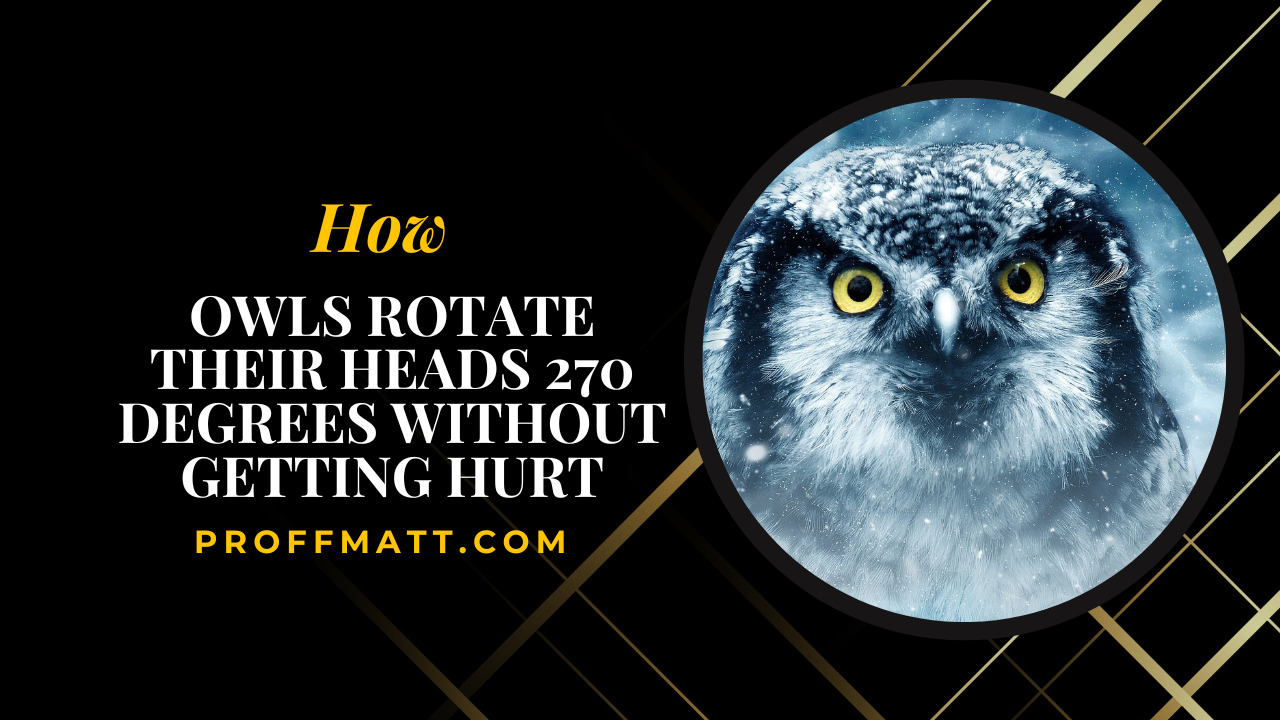
Owls have always fascinated us with their unique abilities. One of the most astonishing is their ability to rotate their heads 270 degrees. How can they do this without injury? Surprisingly, these birds have special adaptations that allow this flexibility without causing harm.
In this post, we’ll uncover the science behind this remarkable trait. You’ll learn about their skeletal structure and the special blood flow that supports this maneuver. We’ll also explore why this ability is essential for their survival. By the end, you’ll have a clearer understanding of how these mysterious creatures thrive. Let’s dive in!
The Anatomy of an Owl’s Neck
Owls are not just impressive hunters; they are masters of neck flexibility. Understanding the anatomy of an owl’s neck reveals how they manage to turn their heads in such astounding ways without injury. Let’s break down the key components that allow this unique ability.
Neck Vertebrae Structure
Owls have a specialized neck structure that sets them apart from humans. While humans have seven cervical vertebrae, owls boast an impressive 14. This extra number provides them with greater flexibility. Each vertebra is structured to allow a broader range of motion, enabling the owl to swivel its head around with ease. Imagine having double the joints to create movement! This remarkable arrangement grants owls the capacity to rotate their heads about 270 degrees, giving them an almost panoramic view of their surroundings.
Muscle Configuration
The muscle arrangement around the neck plays a crucial role in supporting the owl’s head movements. Owls have powerful neck muscles that are intricately connected to their vertebrae. These muscles work in coordination to allow smooth and controlled rotation. Additionally, both superficial and deep muscles contribute to this ability. The deep muscles act as stabilizers, enabling precise adjustments while the outer muscles facilitate the rotational movement. Picture a set of pulleys working in harmony: when one moves, the others follow suit seamlessly. This effective muscle configuration empowers owls to pivot their heads without any strain.
Nervous System Adaptations
The nervous system in owls is uniquely adapted to handle their head-turning prowess. Specialized blood vessels allow for a rich supply of blood to the brain even when the head is turned. This is vital since turning their heads almost completely limits direct blood flow. The arrangement of nerves also ensures that owls maintain proper balance and avoid vertigo in these extreme positions. Imagine trying to balance on one foot while looking in multiple directions at once! The owl’s nervous system ensures they can do this without any confusion or discomfort. With these adaptations, owls can turn their heads freely, maintaining awareness of their environment.
This unique combination of vertebrae, muscles, and nervous system features equips owls with the fascinating ability to not just survive but thrive in their habitats. Understanding these aspects deepens our appreciation for these incredible creatures and their capabilities.
Physiological Limitations
Owls have an impressive ability to rotate their heads nearly 270 degrees, but this flexibility comes with its own set of physiological limitations. Understanding how their body manages these movements can shed light on the remarkable adaptations they possess.
Blood Vessel Adaptations
One of the key adaptations seen in owls is their unique arrangement of blood vessels in the neck. Unlike humans, where a blood vessel can become kinked or compressed during extreme head rotations, owls have a specialized system. They have large, flexible blood vessels that allow for significant movement without damaging the flow of blood.
When an owl turns its head, these blood vessels are designed to shift and stretch. This prevents any lack of blood supply to the brain, which could lead to fainting or even death. Visualize a garden hose: if you bend it slightly, water still flows because of its flexibility. Similarly, owl blood vessels accommodate head movements, ensuring that their brains receive the oxygen and nutrients they need, no matter how far they twist their heads.
Risks of Head Rotation
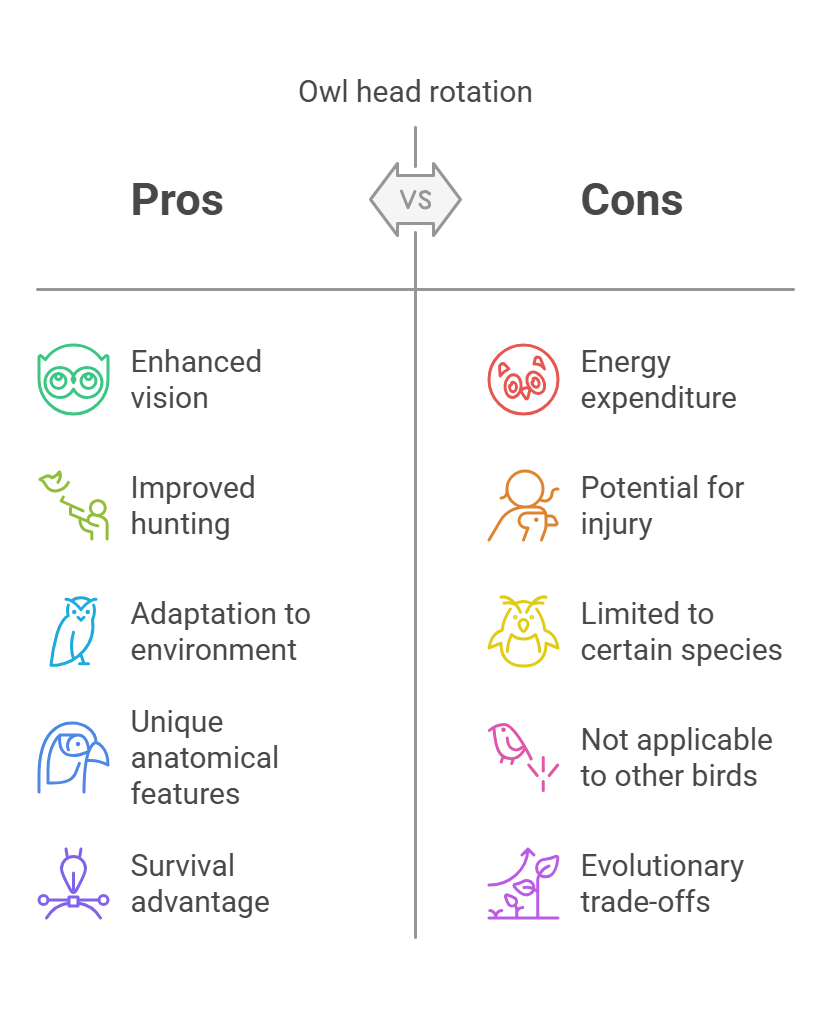
Despite these incredible adaptations, extreme movements can still pose risks. Constantly spinning their heads too far or too often could lead to injury over time. For instance, over-rotation might cause strain in the neck muscles or even potential damage to the vertebrae if they push beyond their limits.
Interestingly, owls cannot rotate their heads a full 360 degrees. This is because certain anatomical structures, like the skull and vertebrae, impose a natural limit. If they attempted to twist their heads all the way around, they would risk injuring critical blood vessels and nerves. Think of it this way: if you stretch a rubber band too far, it might break. Owls know their limits, and by rotating to 270 degrees, they maintain a safe range while still having a broad field of vision.
Owls have honed their head-turning abilities through evolution, but their physiology also dictates how far they can go without facing danger. That balance is key for their survival in the wild. By understanding these limitations, we can appreciate the complexity of their design and the unique challenges these birds face daily.
Vision and Hunting Strategies
Understanding how owls rotate their heads 270 degrees goes beyond anatomy; it touches on their survival skills. Their vision and hunting strategies are perfectly aligned with this unique ability, making them exceptional predators in the dark.
Binocular Vision
Owls benefit from an impressive binocular vision that significantly aids in depth perception during hunting. When an owl turns its head, it creates a wider field of view, allowing them to gather crucial visual information. This capability is not just about seeing what’s directly in front; it enhances their spatial awareness.
Imagine playing a game where you need to catch a moving target. If you can only see straight ahead, you’d miss a lot. But with the ability to rotate your head, you can track the target and gauge how far away it is. This is exactly how owls perceive their environment. By turning their heads, they can assess distances accurately and determine whether prey is within striking range. Their forward-facing eyes help create a three-dimensional view, allowing them to judge not just how far away a mouse might be, but also its speed and direction. This visual precision dramatically increases their chances of a successful hunt.
Silent Flight and Stealth
Owls are known for their remarkable silent flight, but head movement plays a key role in their hunting success. As they glide through the night sky, their ability to rotate their heads allows them to maintain a keen awareness of their surroundings. They can pivot to catch even the slightest sound or movement, perfectly coordinating their sound-absorbing wings with their head rotation.
This combination makes them stealthy hunters. They can turn their heads quietly while gliding, honing in on potential prey without making noise. Think of it like a ninja glancing over their shoulder to spot a target while moving undetected. By seamlessly blending head rotation with their ability to fly soundlessly, owls can swoop in close to their prey without alerting them.
In addition, as they process sounds from different directions, head movement helps them triangulate the exact location of their next meal. Their ability to rotate their heads allows for quick adjustments based on auditory cues, enhancing their hunting strategies. All of this ensures that they remain one step ahead, securing food in the darkness where they thrive.
Owls are not just surviving; they are finely tuned hunters, and their ability to rotate their heads plays a crucial role in this. By understanding their vision and stealth, we gain deeper insight into how they thrive in their environments.
Evolutionary Perspective
Owls possess unique traits that help them thrive as nocturnal hunters. One of these remarkable features is their ability to rotate their heads nearly 270 degrees. This adaptation has significant evolutionary advantages, particularly in predator-prey relationships and survival mechanisms.
Predator vs. Prey Relationships
In the intricate dance between predator and prey, vision proves to be an essential asset. Owls, as predators, rely heavily on their keen eyesight. With their ability to rotate their heads, they can scan wide areas without moving their bodies. This capability allows them to remain hidden while surveying their surroundings for potential prey.
Imagine walking through a dense forest while keeping your head still and only using your eyes to look around. You’d miss out on a lot of valuable information. Owls, however, can quickly rotate their heads to get a full picture, allowing them to track movements that might otherwise escape notice.
This head movement is not just about spotting prey; it also helps owls avoid detection themselves. By keeping their bodies still and using head rotation, they minimize their presence in the environment. This stealth approach improves their chances of catching something to eat while keeping them safe from larger predators that might view them as a meal.
Survival Mechanisms
The ability to rotate their heads plays a crucial role in an owl’s survival across various habitats. Whether they are perched in a tree, flying low over a field, or hunting in dense brush, having a broader field of view is vital. This flexibility enables them to adapt to different environments while maintaining their edge as hunters.
Owls often hunt alone or in pairs. Their head rotation allows them to communicate non-verbally with a partner while staying alert to their surroundings. This coordination can lead to more successful hunts and shared food resources, ultimately increasing their chances of survival.
Moreover, in an ever-changing environment, being aware of what’s happening around them is essential. Their wide field of vision helps them spot potential threats, like larger birds or mammals. Quick head movements provide them with immediate awareness, enabling a rapid response to danger.
Owls have honed this unique adaptation through millions of years of evolution. By mastering head rotation, they’ve become highly skilled at thriving in diverse environments while effectively navigating the challenges of the predator-prey dynamic. This remarkable ability highlights their evolutionary success as efficient hunters.
Conclusion
Owls’ ability to rotate their heads 270 degrees showcases remarkable adaptations that play a significant role in their survival. This flexibility allows them to hunt efficiently and stay aware of their surroundings.
Understanding these traits not only deepens our appreciation for these fascinating birds but also highlights the importance of conserving their habitats. As predators, owls maintain the balance in the ecosystem, impacting various species.
What will you do to support owl conservation? Small actions can lead to meaningful change. Share your thoughts on owl preservation and their role in nature. Thank you for reading!
Filed under:
Author:Adetunji Matthew – Proffmatt
Hi, I’m Adetunji Matthew! I am founder of Proffmatt.com, where I share my journey and help others build successful online businesses.


Leave a Reply